






Catherine Vachon
VP, Business Development, Communications & Marketing


Travelling with children takes planning, but a camper van can make family adventures easier, more flexible, and more enjoyable. Discover how vanlife helps you follow your children’s pace, keep the essentials close at hand, and create lasting memories together.

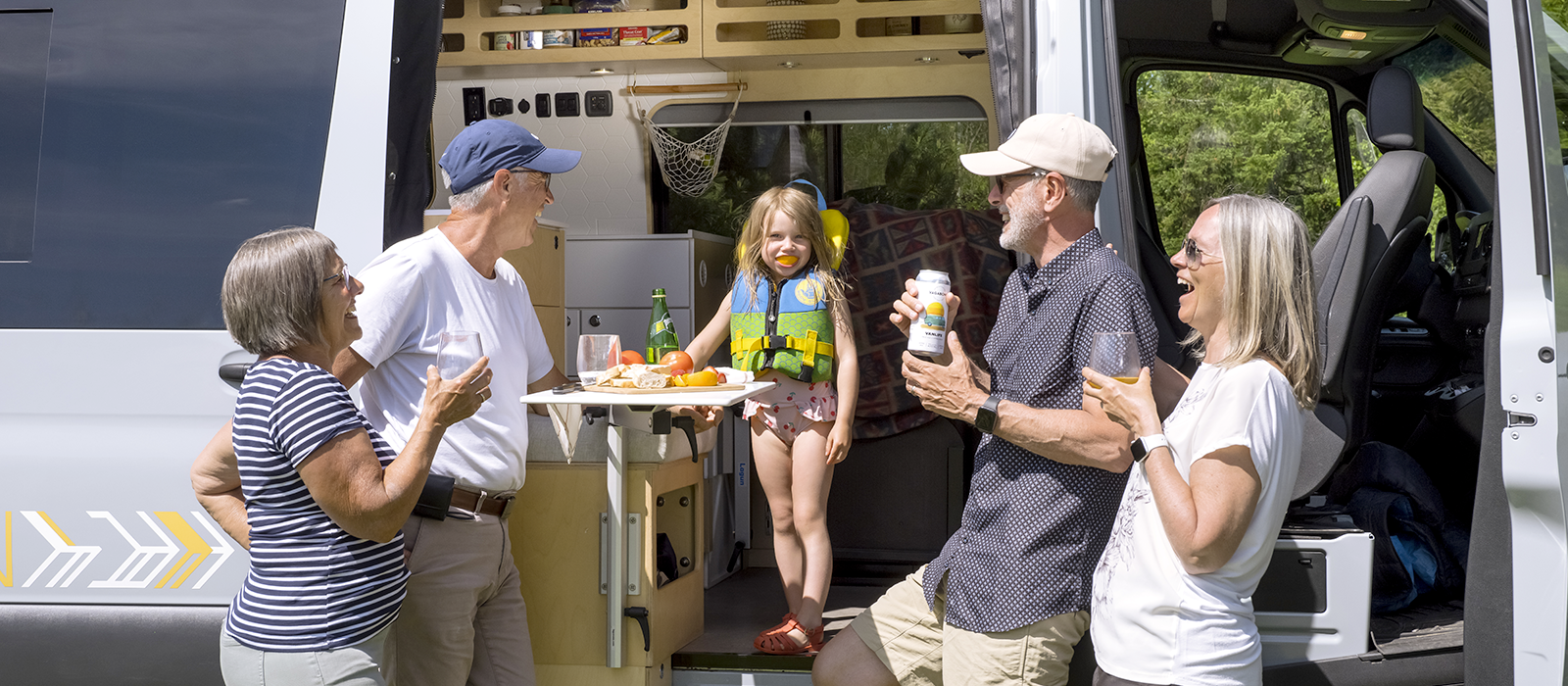
When it comes to family vanlife, many parents instinctively say, “That’s a project for later”—when the children are older, schedules are less hectic, or even after retirement.
Yet travelling by camper van with young children can make everyday family life much easier.
A camper van is more than a recreational vehicle. It becomes a true mobile base camp, stocked with food, clothing, games, beds, and everything you need to quickly meet your family’s needs.
Whether you’re heading out on a long vacation, a weekend camping trip, or simply spending a day outdoors, a camper van makes it easier to get away and enjoy every adventure to the fullest.
Travelling with young children takes organization. They get hungry at the wrong time. They get dirty. They feel hot, then cold. They want to move around, rest, or switch activities.
Those are exactly the moments when a camper van becomes especially convenient.
Unlike traditional travel, there’s no need to return to the hotel, cottage, or home every time a need arises. Everything you need travels with you.
One of the greatest benefits of family vanlife is having everything you need close at hand.
Is your child hungry? Snacks and food are already in the van.
Did they stain their clothes or fall into a puddle? A change of clothes is nearby.
Has the temperature changed? You can quickly grab a jacket, a blanket, or lighter clothing.
Is your youngest getting bored with a toy? A few books, crayons, and activities are already stored in the vehicle.
Even when you’re at a restaurant or visiting a tourist attraction, the van remains accessible. Sometimes, all it takes is grabbing a toy, snack, or sweater to keep a small situation from becoming complicated.
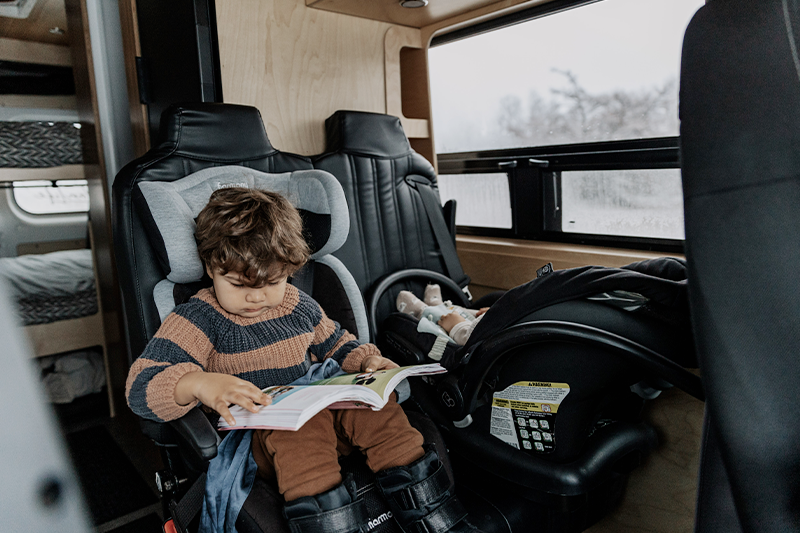
Children enjoy discovering new places, but they also need familiar surroundings. In a van, they return to the same environment: their bed, blankets, clothing, and familiar belongings. This consistency makes mealtimes, rest periods, and bedtime easier. In the morning, there’s no need to get back on the road right away to find a restaurant. Breakfast can be prepared directly in the van’s kitchen. In the evening, the children can sleep comfortably while the parents stay nearby, sitting around the campfire or enjoying the end of the day outside.
Traditional vacations often involve a lot of handling: packing suitcases, loading the car, unloading the luggage, settling in, packing everything up again, and then repeating the process at the next destination. In a camper van, clothing stays organized, beds remain ready, and the kitchen is always accessible. This setup reduces unnecessary transitions and detours. You spend less energy on logistics and more on activities and quality time together. For families who want to explore and visit several regions, this simplicity is a considerable advantage.
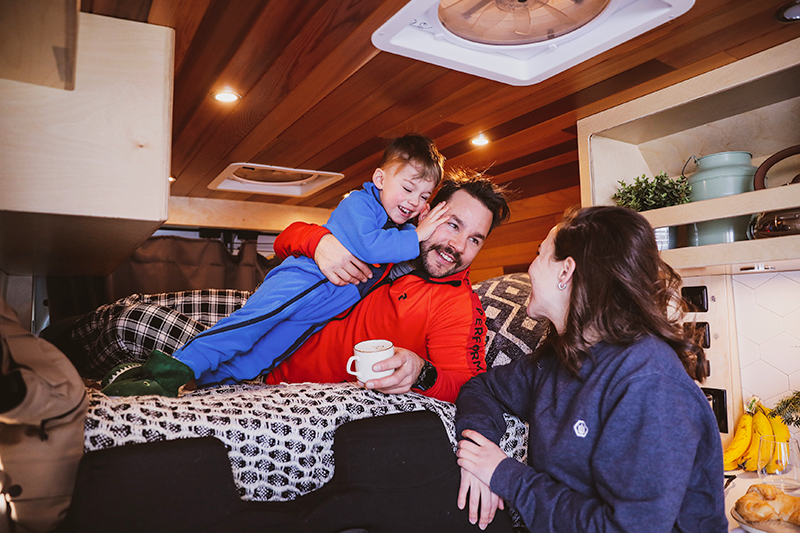
Children don’t always need elaborate activities to be happy.
A trail, beach, wooded area, or grassy space can quickly become an enormous playground. A van lets you set up right next to nature. The children can play outside while the parents prepare a meal, organize the gear, or take a break.
You can eat outdoors, watch wildlife, gaze at the stars, or enjoy an impromptu evening around the campfire. These simple moments often become the most memorable parts of a family trip. They also encourage children to explore, help with everyday tasks, and develop independence.
Travelling as a family requires flexibility.
An activity may not last as long as expected. A child may need a nap. The weather may change, or a carefully planned day may need to be simplified. With a van, it’s easier to stop for a meal, rest, or playtime. You can change your route, stay longer in a place the children love, or leave earlier when needed. A van doesn’t eliminate the unexpected. It simply gives you more ways to handle it.That freedom is especially valuable on a road trip or camping getaway with young children.
A van can also transform a trip to the park, a ski day, a hike, a sports activity, or a visit to the beach. Are the children getting hungry after a few hours? Snacks are already on hand. You can even prepare dinner and turn a simple outing into an impromptu picnic. The vehicle also provides a place to change, warm up, use the washroom, or take a break before heading home. A van makes leisure activities more accessible because it reduces the preparation required and gives you fewer reasons to cut an outing short.
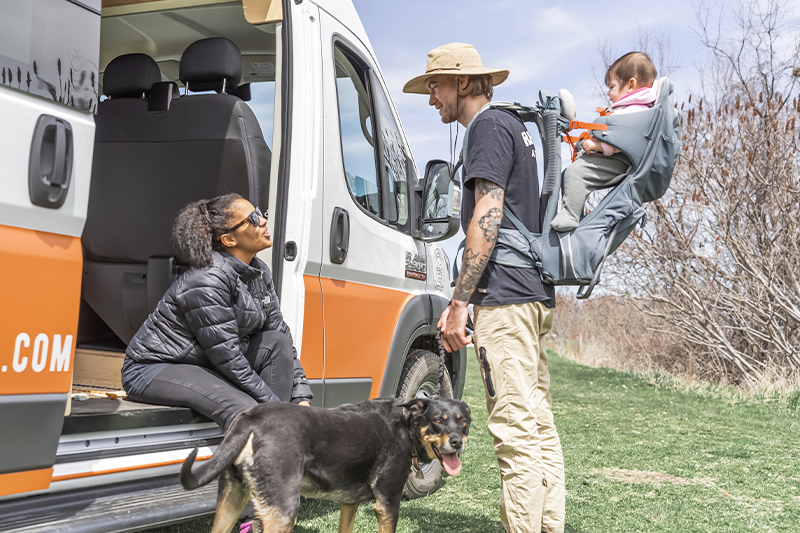
Travel trailers, motorhomes, and camper vans each offer a different camping experience. A travel trailer generally provides more space, but it requires a vehicle capable of towing it as well as more setup once you reach your destination.
A large motorhome offers plenty of comfort, but it may be less convenient to drive, park, or take to certain destinations. A camper van, often classified as a Class B RV, combines transportation, a kitchen, storage, and sleeping space in a more compact format. It’s especially appealing to families who want to move easily between camping, sightseeing, outdoor activities, and everyday travel. The best choice will naturally depend on the number of passengers, the sleeping capacity you need, and the type of adventure you’re looking for.
Getting away as a family can feel complicated when you need to book accommodations, coordinate meals, and pack several suitcases.
A van brings everything you need together in one space. This makes it easier to leave for one night, a weekend, or a few days. Is beautiful weather in the forecast? You can decide to go. Is an activity lasting longer than expected? You can stay. Are the children tired? Their resting space is already available. This simplicity makes outings more accessible and adventures more frequent.
Travelling with young children will never be perfectly predictable. But waiting until they’re older won’t necessarily make the experience more meaningful. The years when they still want to explore with you, sleep close by, and marvel at a campfire go by quickly. Vanlife lets you enjoy this stage now—whether you’re discovering Quebec, going camping, or simply spending more time outdoors.
You don’t need to plan a major road trip right away. Your first experience could be one night close to home, a weekend in a park, or a few days in a familiar region. Choose a van suited to the number of passengers and sleeping spaces you need. Pack versatile clothing, easy snacks, a few games, and a flexible itinerary. Most importantly, don’t try to see everything. Van vacations are often more enjoyable when you plan less and leave more room for breaks and discoveries. Renting a camper van can also be an excellent way to try this style of travel before choosing whether to buy an RV, motorhome, or travel trailer.
Vanlife is often presented as a grand retirement dream centred on freedom. It certainly can be. But it can also become a practical way to simplify family life right now. It lets you keep the essentials nearby, follow your children’s pace, spend more time outdoors, and turn an ordinary outing into a small adventure. So perhaps the right question isn’t, “Will we be ready when the children are older?” Instead, ask yourself, “How many wonderful moments could we share between now and then?”
Yes. A well-organized van keeps meals, clothing, games, and rest areas close at hand. Be sure to choose a vehicle with suitable passenger seating and use all required child-restraint systems while driving.
A few books, games, crayons, and simple activities are usually enough. It’s also important to plan regular breaks and time to play outside.
The right choice depends on the number of passengers, sleeping capacity, and level of comfort you’re looking for. A Class B camper van provides a good balance of off-grid capability, ease of driving, and versatility.