
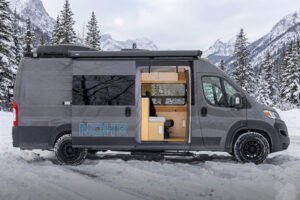

Catherine Vachon
VP, Business Development, Communications & Marketing


Dominick Ménard shares his experience of full-time vanlife… even in winter!
Although the vanlife movement is becoming more and more popular, the idea of selling everything to live full-time in a van still fascinates many. I’ve been doing it for over four years now, and I regularly receive questions about it. With winter approaching, I wanted to answer the five most frequently asked questions.

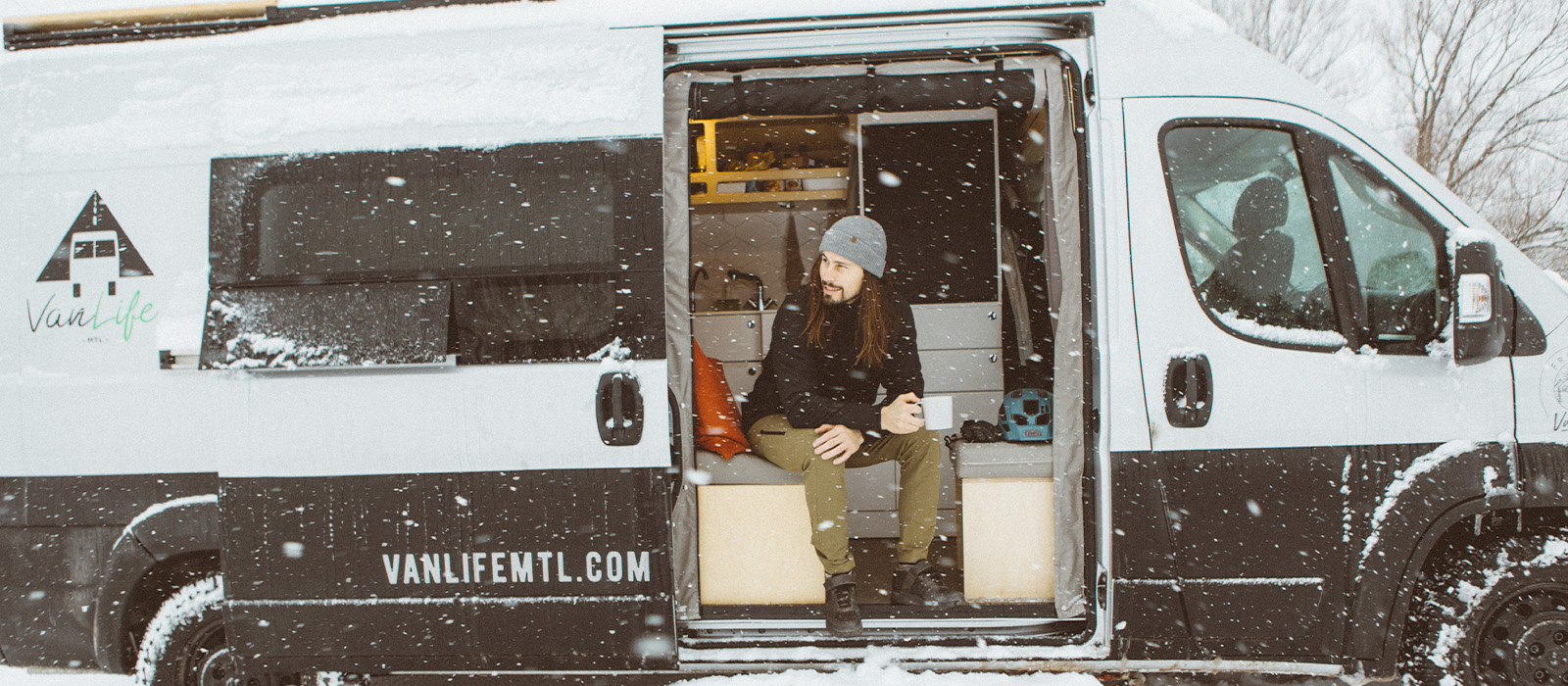
This question always makes me smile.
For me, it’s not that different from living alone in a house, a condo, or an apartment. The main difference is mobility. I can change my surroundings whenever I want: city, countryside, or mountains. Since the space is limited, I make the most of my time outdoors and often end up connecting with more people.
My campervan also allows me to visit friends and stay overnight if I want. During events, I’m already on-site, which makes it easier to meet people. I use public spaces as an extension of my home: cafés for Wi-Fi, gyms or yoga studios to work out and take a proper shower.
In the summer, I spend most of my days in the mountains biking. In the end, I’m not actually in the van that often.
Tips
I’m more of a mountains, sun, and beach type. Usually, I head south during the winter. However, I did spend a full winter in Quebec once, with temperatures around −20°C. If someone had told me when I bought the van that I’d spend an entire winter here, I wouldn’t have believed it.
And yet, I did.
I could have rented a room at a friend’s place, but I loved my lifestyle too much to give it up. The feeling in the spring was incredible—the sense of having truly taken on a challenge.
Tips
Vehicle insulation is essential. It’s non-negotiable.
Even when insulated, the floor gets colder below −10°C.
So you have to adapt:
Wear warm socks, insulated slippers, and add a removable layer on the floor (rug or blanket).
For heating, your vehicle should be equipped with an autonomous auxiliary system, like a Webasto.
In my case, since I needed to heat the van continuously for several months, I plugged into electricity whenever possible and used a standard space heater as a backup.
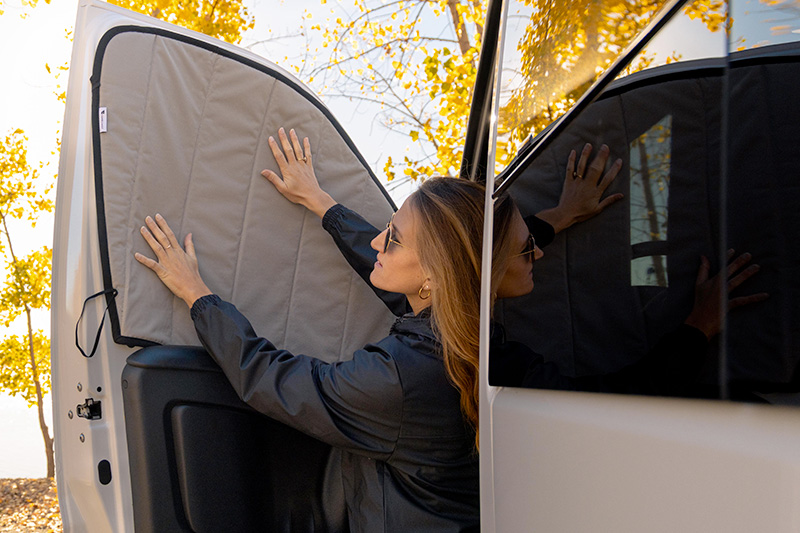
Insulating openings also plays a key role.
Removable insulated panels, like those from VanBlindz, significantly reduce heat loss through windows and the Maxxfan, while improving overall comfort inside the van.
Tips
If the plumbing system isn’t designed for winter, the water will freeze. In that case, you need to winterize the system, drain the lines, and use antifreeze. That was the case with my previous van.
At the time, I used a 5L portable water jug and a dish basin, which I emptied outside daily.
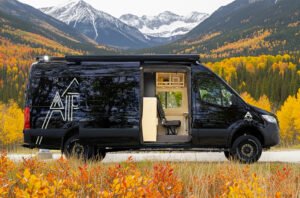
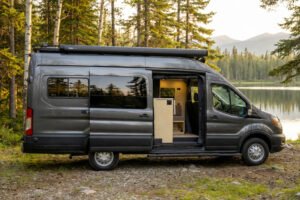
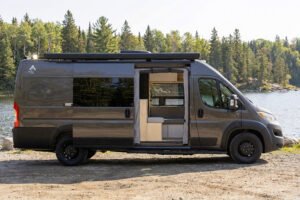
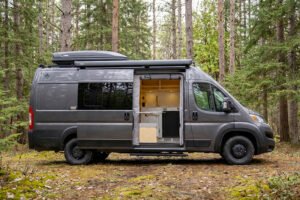
My current van, built by VanLife Campers, is designed for four-season use.
The fresh water tank, plumbing, and heating system are all grouped within the same heated compartment, which prevents freezing.
Since the grey water tank is located outside, valves allow for direct ground drainage in winter to avoid freezing.
TipsKeep the van heated at all times if the water system is in use
If you're away for a few days, plug in a heater and set the system to maintain around 10°C
There’s a big difference between vacations and everyday reality.
Social media mostly shows the easy side.
When it comes to sleeping, several options exist: year-round campgrounds, local agreements, and specialized apps, including:
A Quebec-based platform that lets you book authorized parking spots hosted by local businesses, producers, and partners. A clear, legal, and respectful one-night stay by reservation. Especially well suited to the daily reality of vanlifers, in both summer and winter.
iOverlander
An international community-based app listing places to sleep, water points, services, campsites, and parking areas. Very useful for planning routes and finding options on the road, with user reviews and real-time updates.
FreeCampsites.net
A collaborative directory of free or low-cost overnight spots, mainly in North America. A simple and effective resource for finding alternatives to traditional campgrounds.
Over time, you also develop intuition and rely on word-of-mouth within the community.
However, living full-time in a van comes with an important reality:
not having a fixed home base.
And that’s often what destabilizes people the most.
You need to be comfortable with occasional solitude, stay active, and be aligned with this nomadic lifestyle.
Paradoxically, that’s also what attracts many people to it.
Tips
Test it before committing full-time (rental or borrowed van)
Live a few days as a “full-timer,” including working
Identify a safe fallback location: laundry, shower, water refill
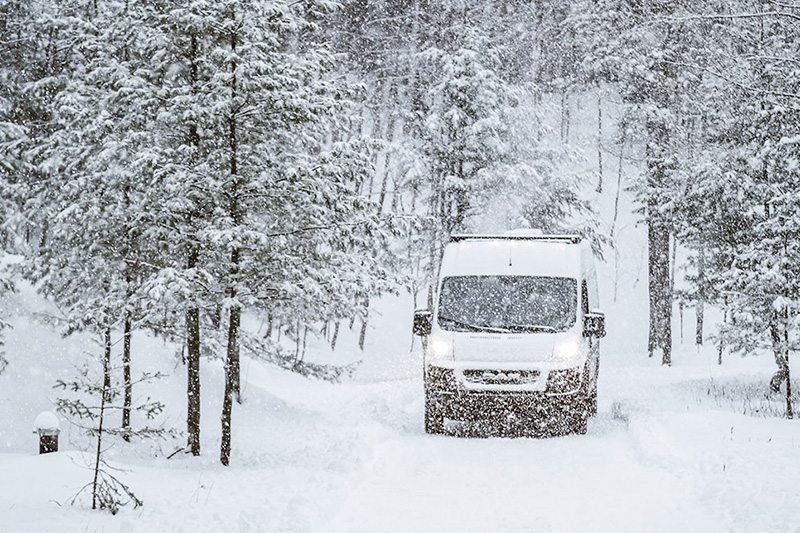
If the idea of vanlife is on your mind, do it first and foremost for yourself. A minimum level of conviction is necessary. This lifestyle offers great freedom, but it also comes with constraints. It requires adaptability, detachment, and a good dose of creativity. Your daily routine changes. Your relationship with comfort changes too. But the adventure is absolutely worth it.
After all, without the van, I probably wouldn’t be here sharing all of this with you.
By Dominick Ménard, VanLife Campers ambassador and founder of Bonvélo
Yes, it is possible, but it requires preparation. A well-insulated 4-season van, an efficient heating system, and proper winter habits are essential to handle temperatures that can drop to −20°C or lower.
Staying warm depends on insulation, auxiliary heating (such as a Webasto), and thermal management of the space. Water systems must be winterized or installed in a heated compartment to prevent freezing. Some setups also use portable water containers or antifreeze when needed.
Full-time vanlifers combine several options such as year-round campgrounds, community apps, and reservation platforms, which offers legal overnight parking at partner businesses. Planning ahead and having backup locations for services like showers and water refills is key.